
Psychosocial Benefits of Therapeutic Improvisational Theatre for People with Parkinson's Disease
Parkinson’s disease effects more than 1.1 million people in the U.S. with 90,000 newly diagnosed each year
BLOG
2/9/20264 min read

Margot Escott LCSW, RfG-CT
Parkinson’s disease effects more than 1.1 million people in the U.S. with 90,000 newly diagnosed each year. Although medications assist in treating the symptoms, there is currently no cure for this disease. It is more prevalent with males than females.
Parkinson’s disease primarily affects the nervous system causing progressive problems with movement like tremors, stiffness and slow walking. This is due partly to the loss of dopamine-producing brain cells. It also impacts non-motor functions like mood, memory and focus.
There are five stages of PD beginning in early stage where people can continue with most of their Activities of Daily Living (ADL’s) and this is characterized by mild tremors, and facial expressions. They also suffer from Hypophonia, speaking too quietly. They feel that they are speaking loudly but others cannot hear them. The facial expressions are disinhibited and this rigidity is called “facial masking”.
As the disease progresses motor symptoms increase and they are at risk for falls. In the more advanced stages, they may be unable to walk and need assistance with most ADL’s.
In 1998 my father was diagnosed with Parkinsons’ disease (PD). As a clinician I became very interested in this incurable neurological disorder and began working with clients and their care partners with PD. He died in 2007 and had Dementia with Lewy bodies, a more severe condition characterized by hallucinations and loss of physical and cognitive abilities.
A few years later I began studying Improvisational Theatre and immediately recognized the therapeutic benefits of using Improv with diverse populations. I discovered the work of Daniel Wiener, author of “Rehearsals for Growth” (RfG) and began studying with him. I became certified as a RfG-CT, trainer and teacher. At this time, I began using Applied Improv in my clinical practice and therapy groups.
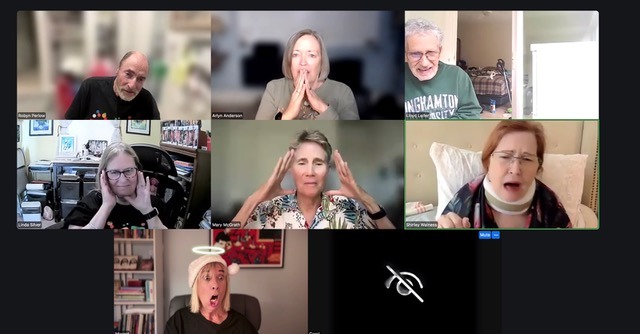
I have been teaching Improvisational Theatre to people with PD, for ten years. Initially in person and online since 2020. I have two ongoing weekly groups with people with varying stages of PD. The students are males and females and range in age from 45 to 82 years old. As classes are virtual, we have students from all over the U.S. Many of my students have confirmed improvement in psychosocial functioning.
In these classes, we don’t discuss Parkinson’s disease but rather focus on having fun with a lot of laughter. Research shows that laughter releases dopamine in the brain which helps boost this neurotransmitter.
I start each class with a musical exercise I call “Two-line Freeze”. I put on lively music, (usually from the 60’s and 70’s) and encourage students to use different facial expressions and to move hands and arms so that everyone can see that on the Zoom screen. I pause the music and call “Freeze” and pick two students and invite them to do a 2-line scene based on their facial and body expressions. This helps with facial masking as well as the enjoyment of music they are familiar with.
We also play singing games like “My Bonnie Lies Over the Ocean” to help strengthen the vocal cords and learn to project their voices.
There is significant research on the value of music with PD clients, including improved voice quality, respiratory function and swallow function. Music also has a strong effect on emotions and holds the power to uplift. This is significant as many PD clients suffer anxiety and depression.
Next, we play “Guess what I’m thinking”. This simple game starts with one person showing a facial emotion. The others “guess” what they may be thinking and then that player shares their actual thought. It’s very helpful to “unmask” the rigid expression.
Gibberish is speaking in a “silly” made up language, or just repeating sounds like, “ba, ba, ba”. As some students have difficulty speaking, using a “silly” language or even just sounds, helps them stay engaged and laugh! Gibberish games, like Translator, where one student speaks in Gibberish and the other translates in English is very popular! There are many variations of this game.
High Engagement: Students consistently look forward to classes, indicating strong motivation and enjoyment. They are highly enthusiastic about attending improv classes. This strong anticipation reflects high engagement and motivation, which is essential for sustained participation in therapeutic activities. Some comments include, “This is the only time in my week where I forget about my PD and have so much fun.”
Cognitive and Communication Benefits: Listening, communication, and facial expressiveness improve through practice, supporting functional and social skills. Students and their families observe notable improvement in listening, highlighting improv’s role in enhancing attention, responsiveness, and cognitive engagement. Stacey said, “My husband notices a big change in our communication, especially in my ability to hear what he’s saying. Learning how to focus has really helped us.”
Mood Enhancement: Many students report experiencing anxiety and depression throughout the week. Improv helps mitigate these feelings through humor, spontaneity, and social interaction. Improv’s emphasis on playfulness, laughter, and social interaction help elevate mood and reduce anxious and depressive feelings. Ted shared that because he really enjoys the other students and looks forward to class, he is already in a better mood when he enters the Zoom room.
Social Impact: For many students, classes are their primary outlet for socialization, outside of being in specific groups that deal with PD symptoms and treatments. Family observations suggest increased engagement and confidence, reinforcing improv’s social benefits. Family and care partners notice some positive changes, particularly in listening and communicating with confidence. By teaching exercises that help with “facial masking” students are better able to express their feelings.
Improv classes are highly engaging and enjoyable, with students reporting improved communication, listening, and facial expressiveness. There is a significant mood enhancement, laughter, and emotional relief, suggesting that improv serves not only as a cognitive and social exercise but also as a therapeutic tool for emotional well-being.
Margot Escott LCSW is a clinical psychotherapist in Naples, Fl for over 40 years. She can be reached at: margotescott@mac.com

IMPROV4WELLNESS
© 2024. All rights reserved.
Call me on my confidential line:
(239) 216-3931